
Stoclet Frieze Collection: Gustav Klimt Oil Painting Reproductions
Klimt’s full-size designs for the mosaic frieze of the dining room in the Palais Stoclet in Brussels: the Tree of Life with its gold spirals, the dancer of Expectation and the embracing couple of Fulfillment.
Showing all 3 results
-
Sale!
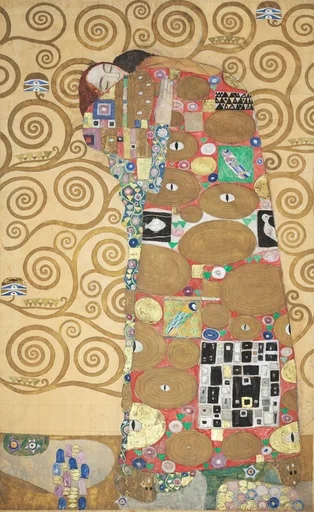
Stoclet Frieze: Fulfillment
From $87 -
Sale!
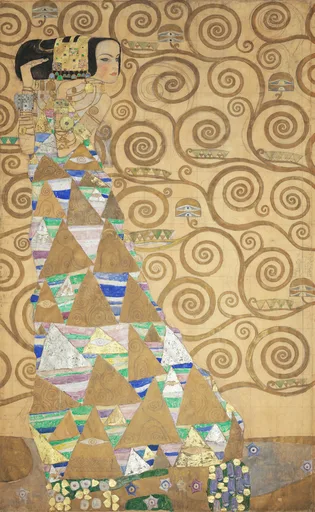
Stoclet Frieze: The Expectation (Dancer)
From $87 -
Sale!
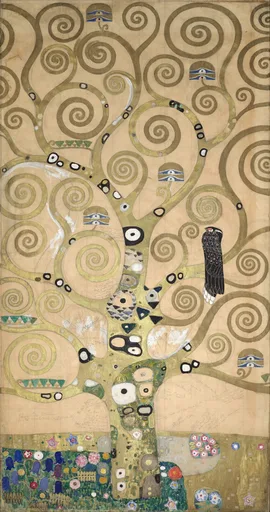
Stoclet Frieze: Tree of Life
From $87
The Stoclet Frieze is one of the few works Klimt made on a monumental scale: a mosaic of marble, enamel, metal and semi-precious stones that runs around the dining room of the Palais Stoclet in Brussels. Craftsmen in Vienna made it from his drawings, and those full-size working designs, which he finished in 1911, are now in the MAK, the Museum of Applied Arts in Vienna. This collection reproduces them, each as a hand-painted oil reproduction or an archival canvas print.
What the Stoclet Frieze means in Klimt's work
The Belgian banker and collector Adolphe Stoclet asked the Viennese architect Josef Hoffmann to build his family house in Brussels, and Hoffmann and the artists of the Wiener Werkstätte designed it down to the tableware and the garden. Completed in 1911, it is now a UNESCO World Heritage Site. Klimt was given the walls of the dining room.
His design is built around the Tree of Life, which spreads its spiralling gold branches along the long walls, with black birds among them and a meadow of flowers at its foot. On one wall a dancer in a robe of triangles, Expectation, stands among the branches; across the room, Fulfillment shows a couple locked in an embrace, the man seen from behind in a robe of gold and brown ovals. An abstract figure, sometimes called the Knight, fills the narrow end wall. Klimt drew on Egyptian, Byzantine and Japanese models, and the gold and pattern belong to the same years as The Kiss. More on the tree is on the story page of the Tree of Life.
Because they are working drawings, the sheets show how the mosaic was planned. Klimt drew on tracing paper in pencil, added gold, silver, bronze and platinum, pastel and gouache, and wrote instructions to the craftsmen on the sheets: only the finest materials, such as enamel, mother-of-pearl and gold leaf. Leopold Forstner's Vienna Mosaic Workshop combined marble, ceramic, enamel and metal parts into large mosaic panels, which were shipped to Brussels and fitted in the dining room. The mosaic is still there, in a house that remains privately owned.
How each reproduction is made to order
An artist paints the hand-painted oil reproduction from scratch in oil on canvas, from the museum's open-access photograph of the design, following its pale ground and gold spirals. The archival canvas print is a giclée of the same photograph in pigment inks. Neither edition uses metal leaf: the gold, silver and bronze of the designs are suggested with paint or printed colour. Every size keeps the tall, narrow proportions of the sheets, so nothing is cropped.
Each piece is made after you order, rolled, stretched ready to hang, or framed. A hand-painted canvas is photographed before it ships so you can approve it.
Frequently asked questions
Are these reproductions of the mosaic in Brussels?
No. They reproduce Klimt's full-size working designs on paper, held by the MAK in Vienna, from which the mosaic was made. The designs show the composition and colours of the frieze, in places with Klimt's notes to the craftsmen.
How do Expectation and Fulfillment go together?
In the dining room they face each other from opposite walls. Hung as a pair, on either side of a window, a doorway or a sideboard, they repeat that arrangement.
Which room suits the Stoclet Frieze?
A dining room, since the frieze was made for one. The tall format also fits a hallway, a stairwell or the narrow wall between two windows. More pictures for the table are in our Kitchen & Dining selection.