
Trees & Forests in Gustav Klimt Paintings
Forests, orchards and single trees by Klimt, from the pine, beech and birch woods of the early 1900s to the fruit trees of his last summers, and the gold Tree of Life he designed for the Stoclet Frieze.
Showing all 12 results
-
Sale!
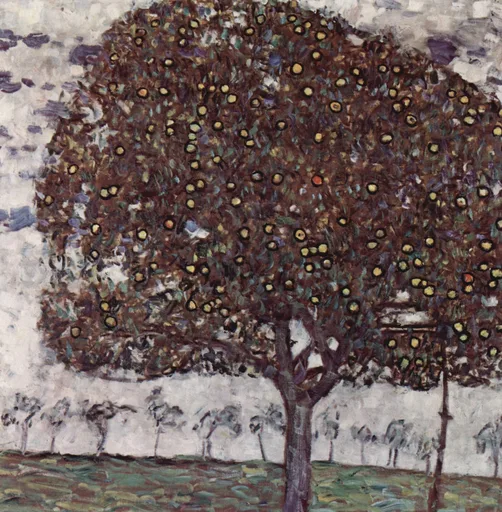
Apple Tree II (Green Apple Tree)
From $87 -
Sale!
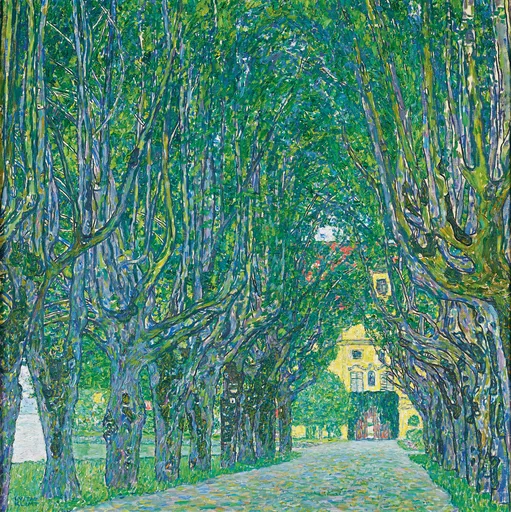
Avenue to Schloss Kammer
From $87 -
Sale!
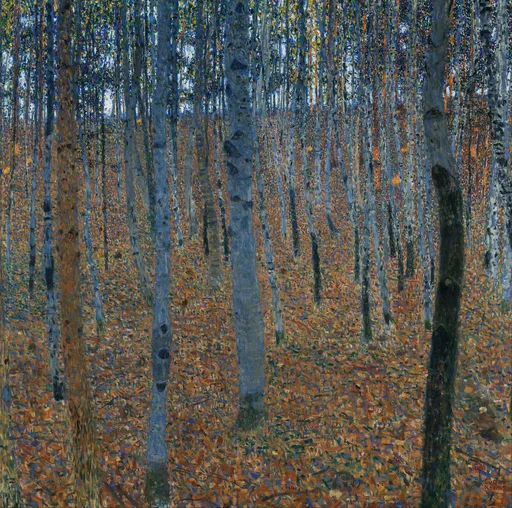
Beech Forest I
From $87 -
Sale!
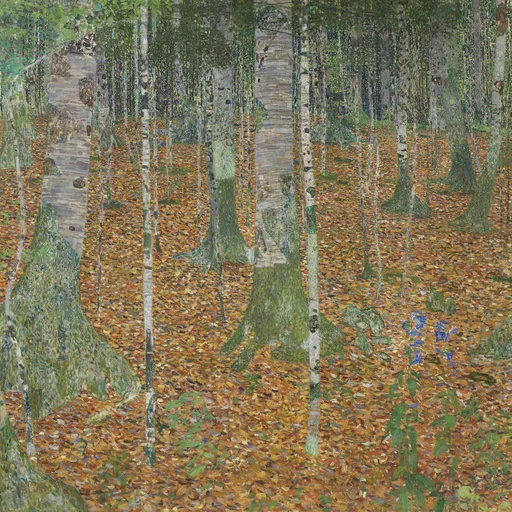
Birch Forest (Beech Forest)
From $87 -
Sale!
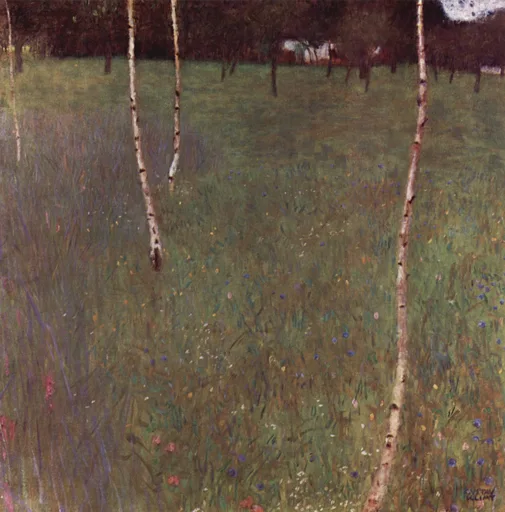
Farmhouse with Birch Trees
From $87 -
Sale!
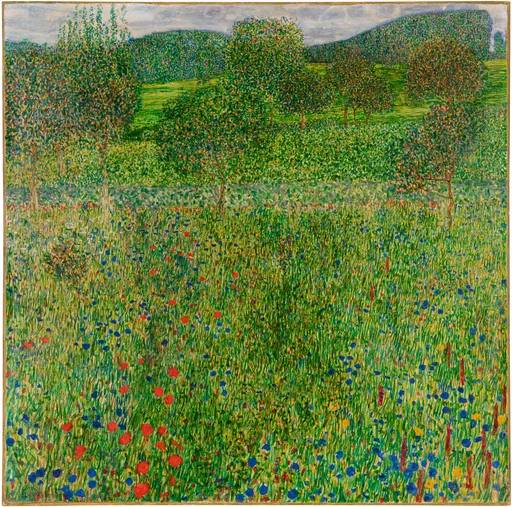
Orchard (A Summer’s Day)
From $87 -
Sale!
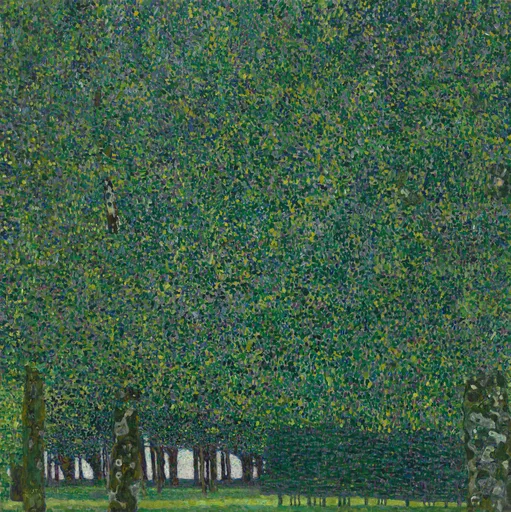
Park of Kammer Castle on the Attersee
From $87 -
Sale!
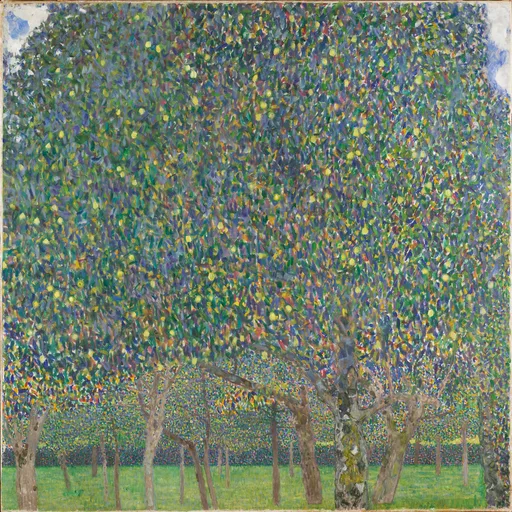
Pear Tree
From $87 -
Sale!
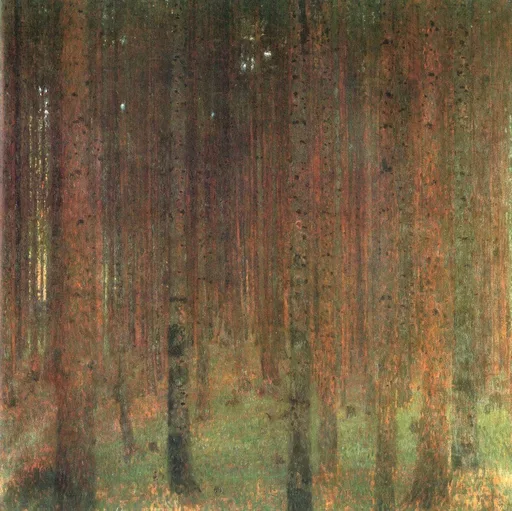
Pine Forest II
From $87 -
Sale!
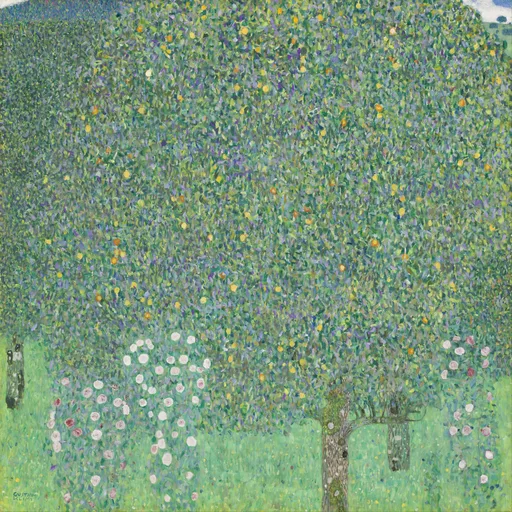
Roses beneath Trees
From $87 -
Sale!
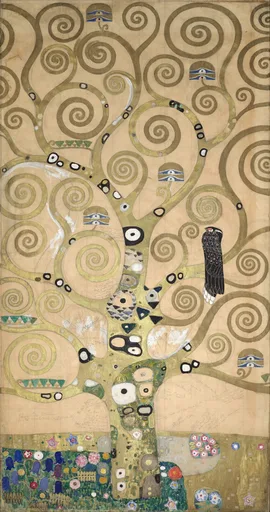
Stoclet Frieze: Tree of Life
From $87 -
Sale!
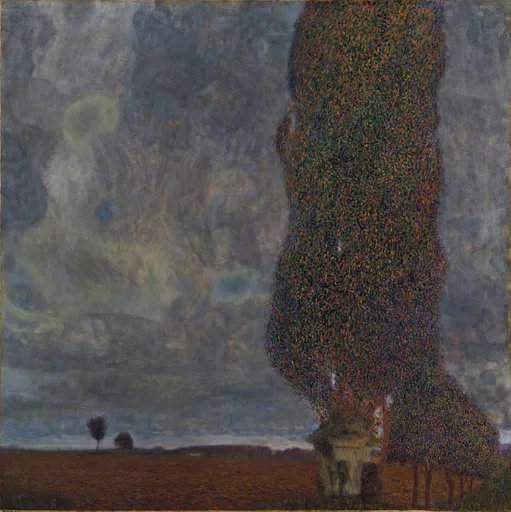
The Large Poplar II (Gathering Storm)
From $87
Klimt looked at trees the way he looked at fabric. In his forest pictures there is no path, no figure and almost no sky: only trunks set side by side across a square canvas, and the light caught on bark and fallen leaves. This collection gathers his woods, his orchards and his single trees, each available as a hand-painted oil reproduction or an archival canvas print.
What trees and forests mean in Klimt's work
The woods come first. Pine Forest II (1901), Beech Forest I (c. 1902) and Birch Forest (Beech Forest) (1903) stand the trunks in rows like the threads of a loom, while the forest floor, copper and gold in the birch picture, becomes a carpet of small strokes. Farmhouse with Birch Trees (1900) uses the same pale trunks to frame a meadow, and The Large Poplar II (Gathering Storm) (1903) sets a single dark tree against a heavy sky, one of the few storms in Klimt's work.
Fruit trees bring colour. Pear Tree (1903), Orchard (A Summer's Day) (1907) and Apple Tree II (Green Apple Tree) (1916) scatter fruit and blossom through dense foliage, and Roses beneath Trees (1905) mixes rose bushes into the leaves. Avenue to Schloss Kammer (1912) and Park of Kammer Castle on the Attersee (1909) show trees planted by people, in a line and in a park.
Stoclet Frieze: Tree of Life (1910-1911) is the exception: a design for a wall mosaic in Brussels, its branches rolled into gold spirals.
How each reproduction is made to order
For the hand-painted oil reproduction, an artist paints the canvas from scratch in oil, working from the museum's open-access photograph. Leaves and bark are laid in as separate strokes, so the surface catches the light the way the original does. The archival canvas print is a giclée of the same photograph in pigment inks, for an exact and even image. Sizes keep the original proportions, which for most of these pictures means a square.
Every canvas is made after you order, rolled, stretched or framed, and a hand-painted piece is photographed for your approval before it ships.
Frequently asked questions
Is Stoclet Frieze: Tree of Life a landscape?
No. It is Klimt's design for part of a mosaic frieze in the dining room of the Palais Stoclet in Brussels, and the tree is a symbol drawn in spirals of gold. It sits here because a tree is its subject.
Which forest picture is the calmest?
Pine Forest II has the quietest palette, greens and browns with little contrast. The birch picture is warmer, with its copper floor of leaves.
Oil or print for a forest scene?
The oil, if you want texture: the brush marks make leaves and bark stand slightly off the canvas. The print, if you want an exact image of the photograph at a lower cost. Both are made to order.