
Gardens & Parks in Gustav Klimt Paintings
Farm gardens, orchards and the park of Kammer Castle, painted by Klimt on the Attersee and on Lake Garda: places he walked through every summer, seen close up and filled with leaves and flowers to the edge of the canvas.
Showing all 14 results
-
Sale!
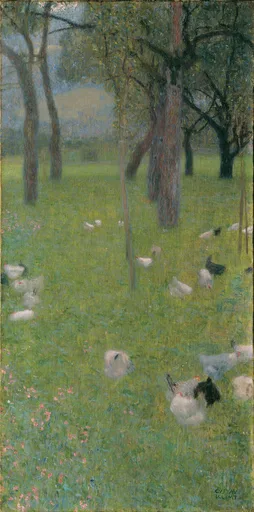
After the Rain
From $87 -
Sale!
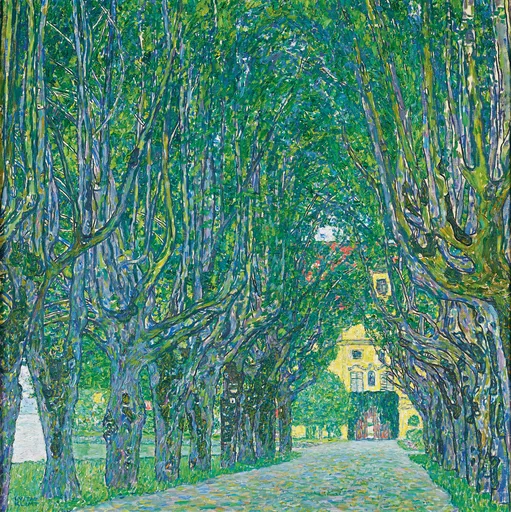
Avenue to Schloss Kammer
From $87 -
Sale!
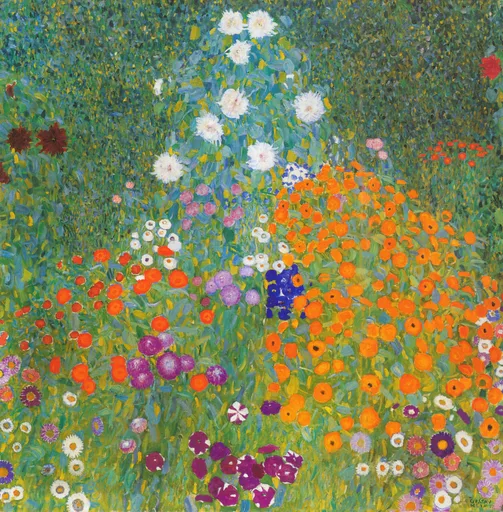
Cottage Garden
From $87 -
Sale!
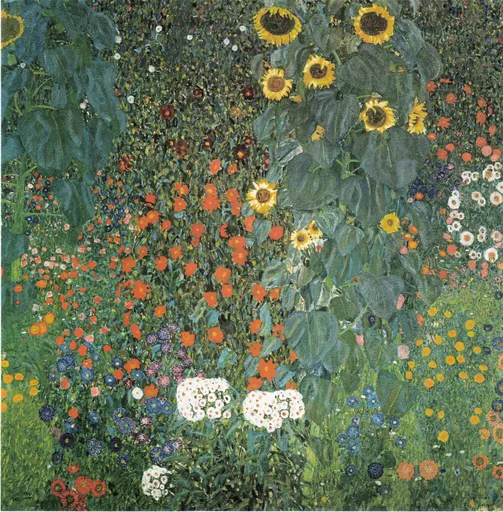
Cottage Garden with Sunflowers
From $87 -
Sale!
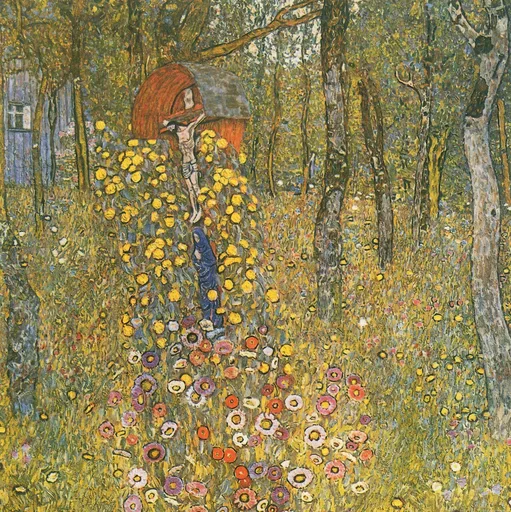
Country Garden with Calvary
From $87 -
Sale!
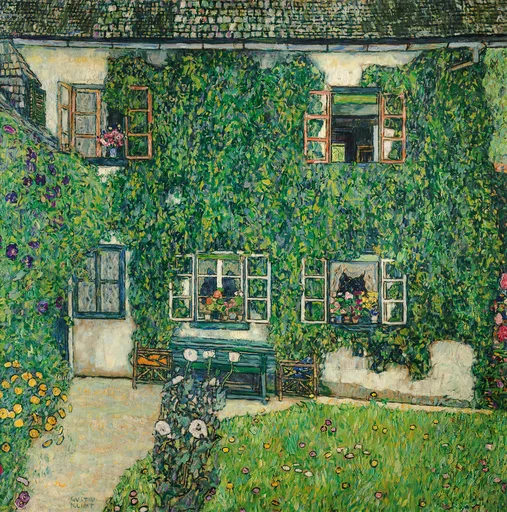
Forester’s House in Weissenbach II (Garden)
From $87 -
Sale!
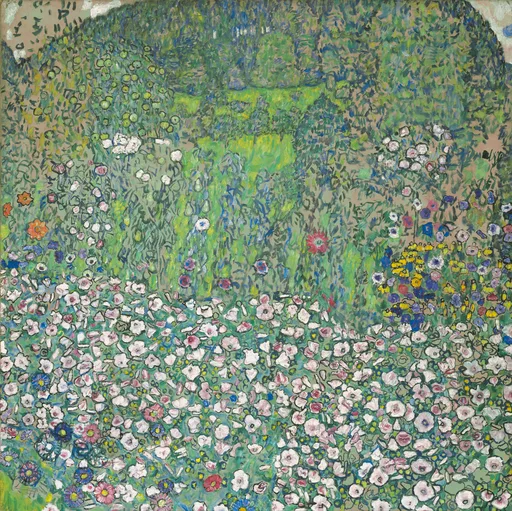
Garden Landscape with Rounded Mountaintop (Parsonage Garden)
From $87 -
Sale!
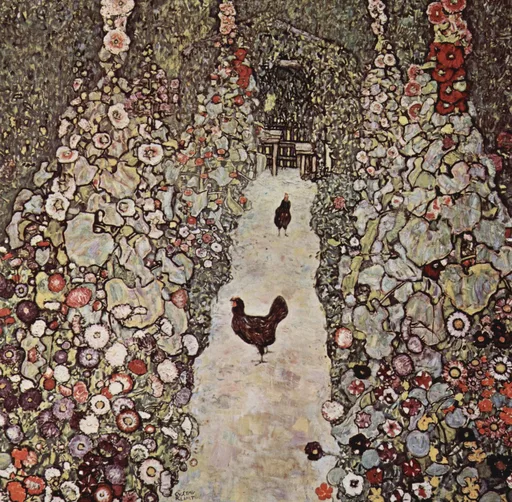
Garden Path with Chickens
From $87 -
Sale!
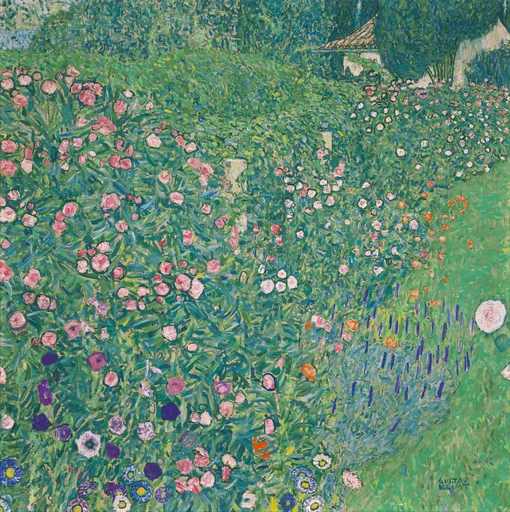
Italian Garden Landscape
From $87 -
Sale!
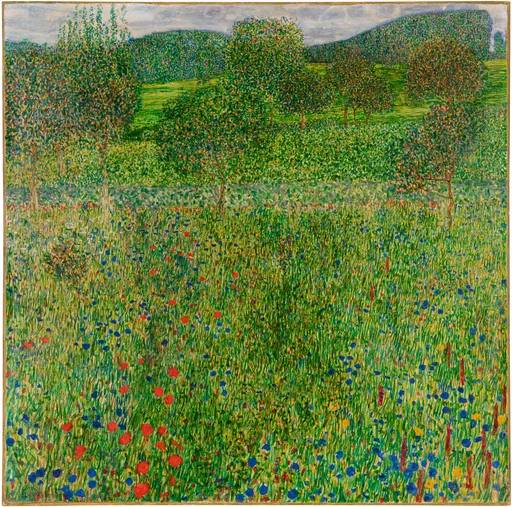
Orchard (A Summer’s Day)
From $87 -
Sale!
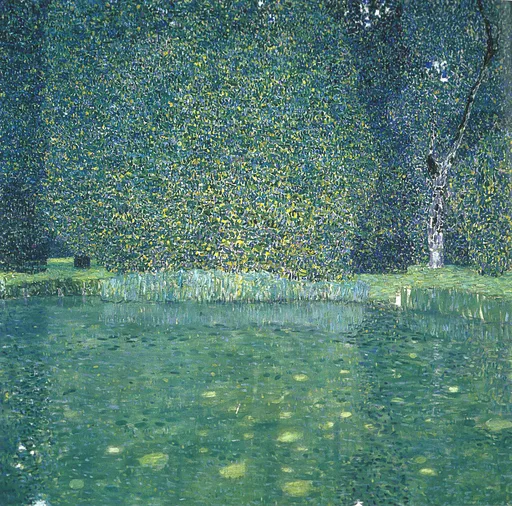
Park at Kammer Castle
From $87 -
Sale!
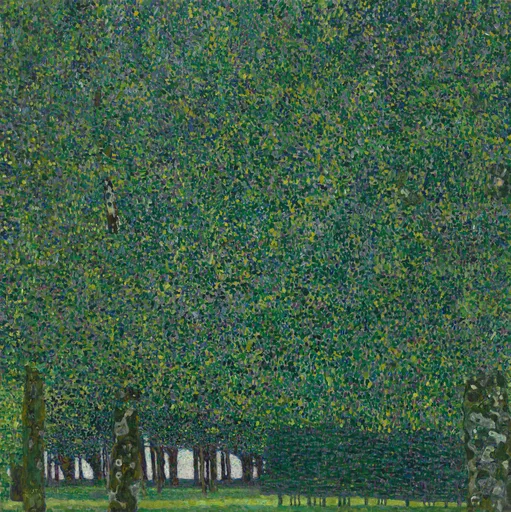
Park of Kammer Castle on the Attersee
From $87 -
Sale!
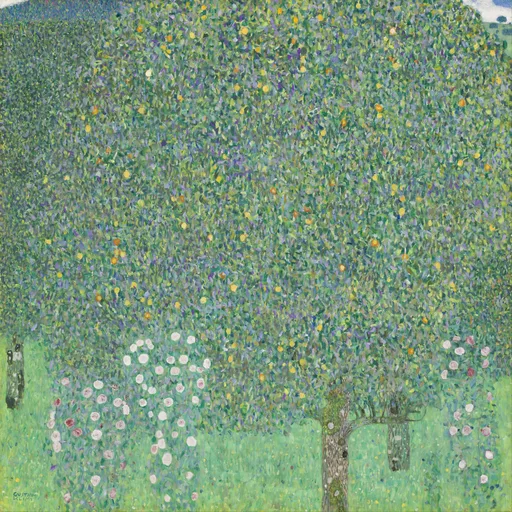
Roses beneath Trees
From $87 -
Sale!
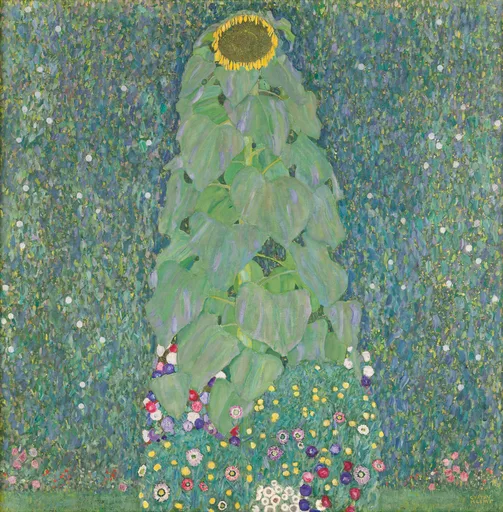
Sunflower
From $87
Gardens are where Klimt's landscapes begin and end. After the Rain (1898), a tall, narrow picture of hens under fruit trees, is one of his first; Garden Path with Chickens (1916) is one of his last. Between them come the farm gardens of the Attersee, the park of Kammer Castle and an Italian garden on Lake Garda, all available here as hand-painted oil reproductions or archival canvas prints.
What gardens and parks mean in Klimt's work
Klimt seldom painted grand formal gardens. He preferred the working gardens of the farms and houses where he stayed: beds crowded with sunflowers and roses, a crucifix at the corner of a plot, chickens on the path. Cottage Garden (1907) and Cottage Garden with Sunflowers (1906) look straight into the beds, with no ground line and no sky, so the flowers become a standing wall of colour.
The park pictures are darker and deeper. Park at Kammer Castle (1909) and Park of Kammer Castle on the Attersee (1909) are made of dense green foliage around water and trunks, and Avenue to Schloss Kammer (1912) leads the eye down a corridor of trees to the house. In Forester's House in Weissenbach II (Garden) (1914) and Garden Landscape with Rounded Mountaintop (Parsonage Garden) (1916), the late Klimt lets the colour run brighter and the touch grow looser.
How each reproduction is made to order
An artist paints the hand-painted oil reproduction from scratch, in oil on canvas, following the museum's open-access photograph of the original. In a garden picture that means thousands of separate touches for leaves and petals, each one visible on the finished canvas. The archival canvas print is a giclée of the same photograph in pigment inks, smooth and exact. Every size keeps the original proportions, and nothing is cropped to fit a standard frame.
You can have the canvas rolled, stretched ready to hang, or framed. A hand-painted piece is photographed before it ships so you can approve it.
Frequently asked questions
Where are the gardens in these paintings?
Most are on the shores of the Attersee in Upper Austria, around Litzlberg, Kammer Castle and Weissenbach, where Klimt spent his summers. Italian Garden Landscape comes from his stay on Lake Garda in 1913.
Which garden picture is the most colourful?
Cottage Garden with Sunflowers and Garden Path with Chickens carry the strongest yellows and reds. For a cooler, greener wall, choose one of the Kammer Castle park views.
Do these paintings suit a dining room?
Yes. Their greens and flower colours sit well with wood and linen, and several are in our Kitchen & Dining selection, alongside Klimt's orchards and fruit trees.