
Nudes Collection: Gustav Klimt Oil Painting Reproductions
The nude in Klimt‘s painting and drawing, from an academic male study of 1883 to Danaë, Hope I and the Water Serpents, and the pencil drawings in which a single contour holds the whole body.
Showing all 16 results
-
Sale!
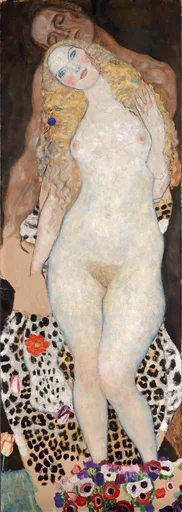
Adam and Eve
From $87 -
Sale!
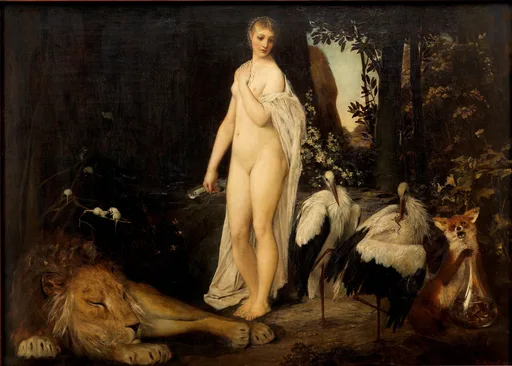
Allegory of Fable
From $87 -
Sale!
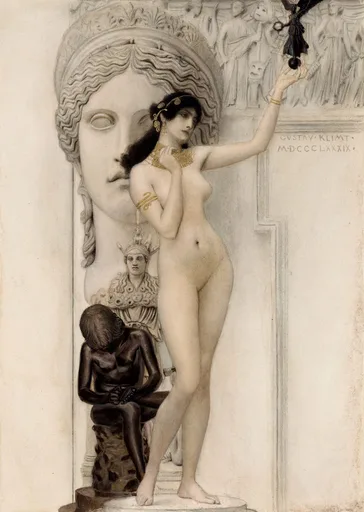
Allegory of Sculpture
From $87 -
Sale!
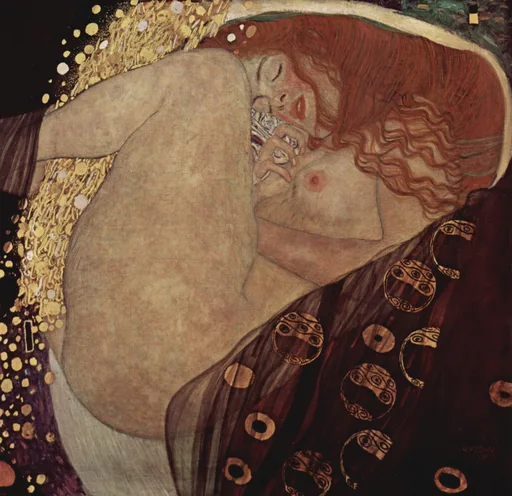
Danaë
From $87 -
Sale!
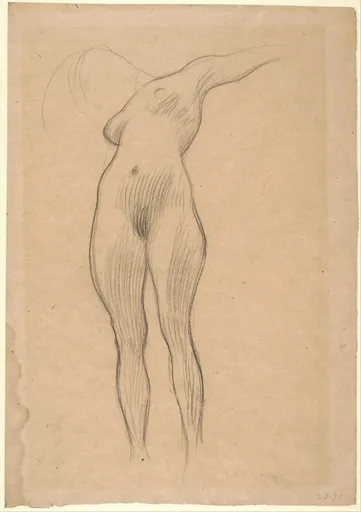
Floating Woman with Outstretched Arm (Study for the first version of “Medicine”)
From $87 -
Sale!
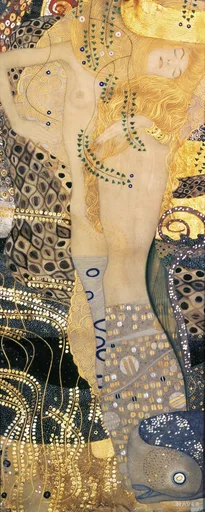
Girlfriends (Water Serpents I)
From $87 -
Sale!
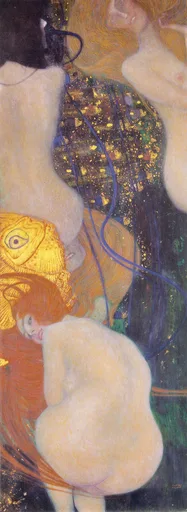
Goldfish
From $87 -
Sale!
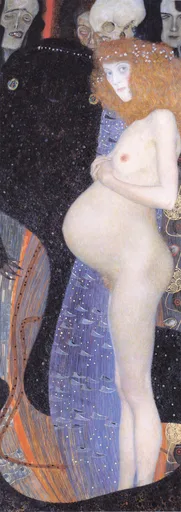
Hope I
From $87 -
Sale!
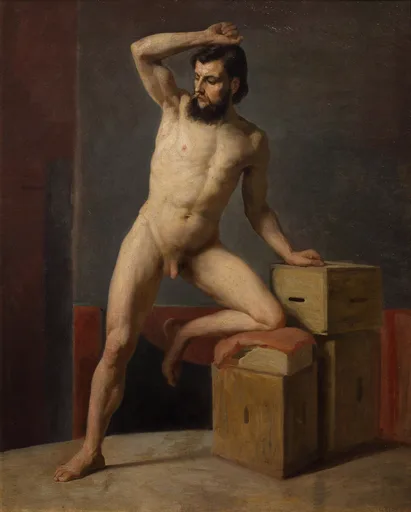
Male Nude
From $87 -
Sale!
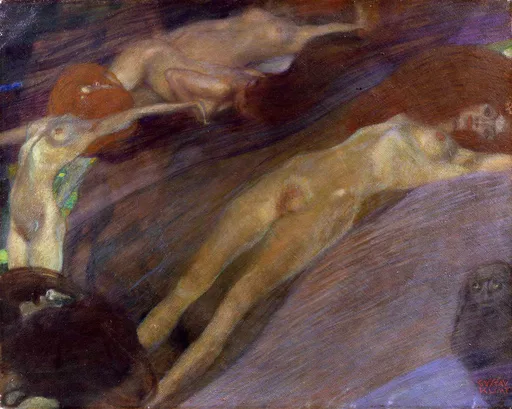
Moving Water
From $87 -
Sale!
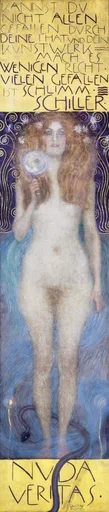
Nuda Veritas
From $87 -
Sale!
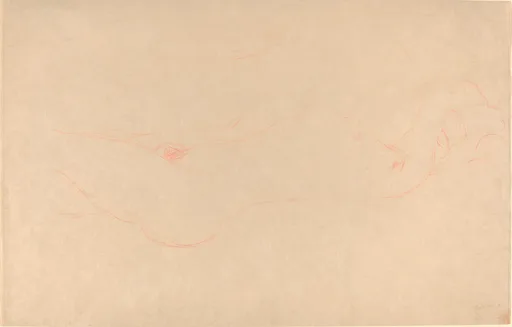
Reclining Woman
From $87 -
Sale!
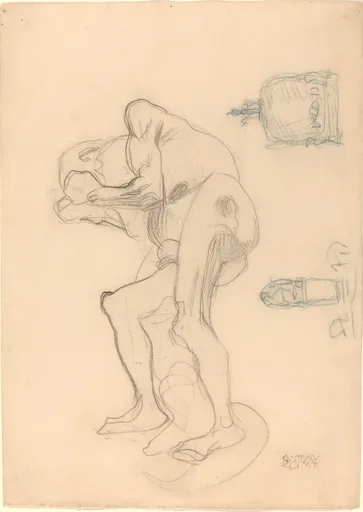
Study of a Nude Old Woman Clenching Her Fists, and Two Decorative Objects
From $87 -
Sale!
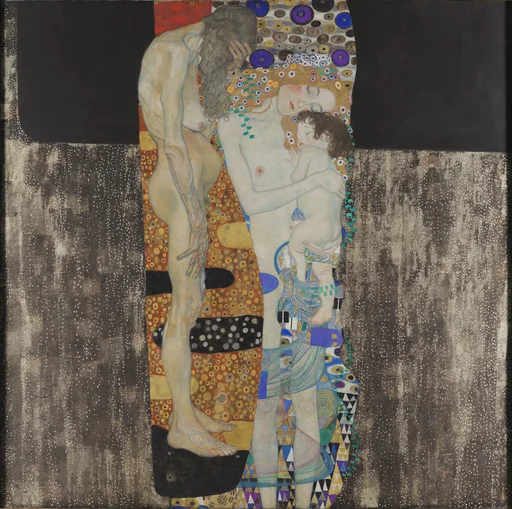
The Three Ages of Woman
From $87 -
Sale!
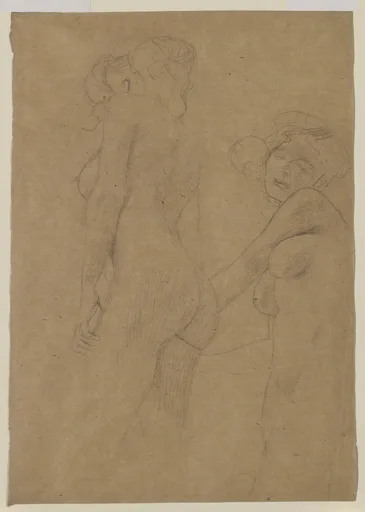
Two Female Nudes Standing
From $87 -
Sale!
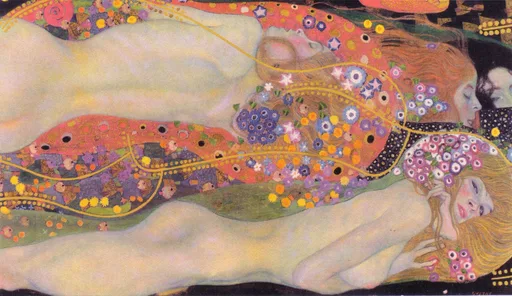
Water Snakes II
From $87
The nude runs through Klimt's career more steadily than gold does. He trained on it, he provoked Vienna with it, and to the end of his life he drew it from models in his studio. This collection gathers his painted and drawn nudes, each available as a hand-painted oil reproduction or an archival canvas print.
What the nude means in Klimt's work
The earliest works are exercises. Male Nude (1883) is a life study from his student years, and Allegory of Fable (1883) and Allegory of Sculpture (1889) use the nude as the classical tradition did, to carry an idea. Moving Water (1898) and Nuda Veritas (1899) break with that tradition: the bodies are slender, the hair is loose, and Truth stares straight out of the canvas holding a mirror.
The scandal pictures followed. Goldfish (1902), which Klimt had wanted to call To My Critics, shows a nude turning her bare back to the viewer. Hope I (1903), a pregnant nude in profile, was judged so provocative that it was kept out of public exhibitions for years. Danaë (1907), Girlfriends (Water Serpents I) (1904) and Water Snakes II (1904-1907) wrap the body in gold and pattern, and Adam and Eve (1916-1918) returns to a single standing nude at the end of his life.
The drawings are the most direct. Floating Woman with Outstretched Arm (1900-1901) is a study for Medicine, one of his ceiling paintings for the University of Vienna, while Two Female Nudes Standing (1900s) and Reclining Woman (c. 1909) show how few lines Klimt needed.
How each reproduction is made to order
For the hand-painted oil reproduction, an artist paints the work from scratch in oil on canvas from the museum's open-access photograph, building the skin in thin, pale layers. The archival canvas print, a giclée of the same photograph in pigment inks, keeps the pencil line of the drawings exactly. Sizes follow the original proportions.
These are frank pictures, so choose the wall with care: a bedroom, a dressing room or a private study suits most of them. A hand-painted canvas is photographed before it ships so you can approve it.
Frequently asked questions
Why did Klimt's nudes cause a scandal?
Vienna accepted the nude in a mythological or academic setting. Klimt painted women who looked like his contemporaries, pregnant, sleeping or turning their backs, without that cover, and many critics took it as an affront.
Which nude is the most decorative?
Danaë and Girlfriends (Water Serpents I), where gold and pattern take up as much room as the body. Nuda Veritas is the most direct.
Are the drawings reproduced in colour?
They are reproduced as they are: pencil or chalk on paper, in browns, greys and creams. The print keeps the line closest to the original; the oil version gives it a painted surface.