
Large Klimt Wall Art Without Cropping the Painting
Buying large Klimt wall art is mostly a question of proportion, distance and patience. This guide explains how to size a big piece for your wall without cropping the painting, and what changes when the work is large.
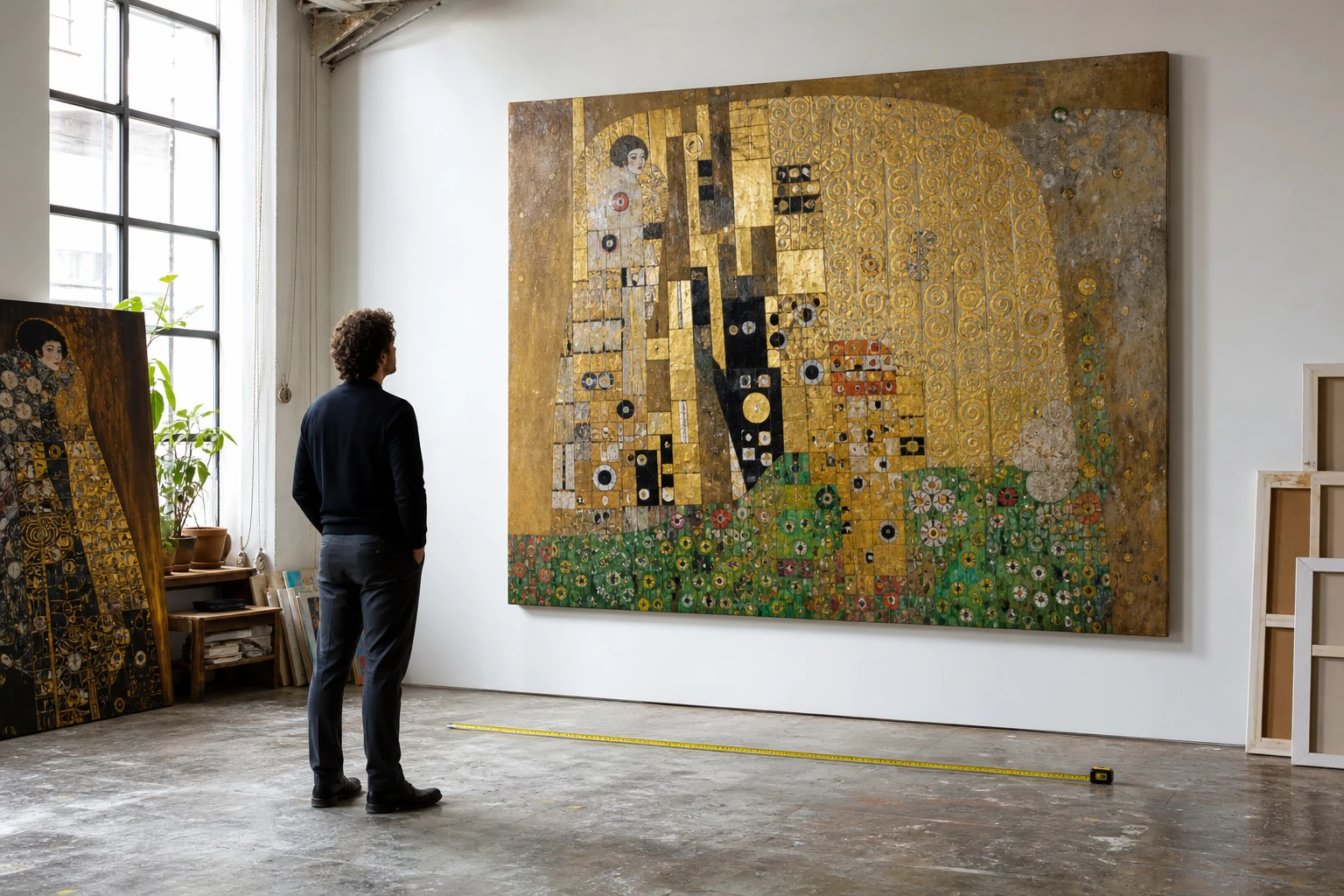
Keep the original aspect ratio
Gustav Klimt composed each painting for a particular shape. Some of his works are square, some are tall and narrow, and some are close to a standard portrait or landscape format. A reproduction that is cropped to fit a stock frame loses part of that composition: a figure loses its surrounding ornament, or a landscape loses the empty sky that gave it balance.
For that reason every size in the store keeps the proportions of the original. If your wall suits a different shape, choose another painting or another size rather than asking for a crop. The size guide shows the sizes available for each proportion.
Measure the wall and the viewing distance
Start with the wall, not the painting. Measure the width and height of the clear space, then note where people will usually stand or sit when they look at it.
- Mark the outline on the wall with masking tape or paper templates before choosing.
- Stand at the main viewing point and check that you can take in the whole painting without turning your head.
- Remember that Klimt’s flat gold and patterned areas read well from across a room, while fine detail rewards a closer look.
- Allow for the frame, which adds to the overall width and height.
A useful rule of thumb is that a large piece should be seen from at least a couple of times its longest side. If the viewing distance is short, a very large canvas can feel overwhelming.
How much wall to leave around a canvas
Large works need breathing space. Over a sofa, bed or sideboard, the painting usually looks best when it is a little narrower than the furniture beneath it, so it feels anchored rather than crowded. Leave a clear margin at both sides, and hang it so the centre sits at a comfortable eye level, with a modest gap above the furniture.
On a bare wall with no furniture, leave more space on every side, since nothing else frames the piece. Light switches, doors and radiators should stay clear of the edges. The framing guide explains how a frame or a floating stretcher changes the overall footprint.
One large piece, a pair or a series
A single very large canvas is not always the best answer. If the wall is wide but low, or the painting you love is tall and narrow, two or three works hung together can fill the space better and keep each proportion intact. A pair of related paintings, or a short series with a shared palette, also lets you vary the scale and still keep a calm rhythm. Keep equal gaps between the pieces and align them on a common centre line.
Large hand-painted oil or large print
Scale changes the experience of both editions. A large hand-painted oil is painted from scratch by an artist, so the brushwork and surface texture become more visible and more rewarding the bigger it is, with slight natural variation from one piece to another. A large archival canvas print is a high-resolution giclee of the same museum image, printed with pigment inks, and gives a consistent, photographic result. Both keep the original proportions. Read the shop listings for the editions offered for each painting.
Checklist before you order
- Wall width and height measured, with the outline taped up.
- Viewing distance checked from the main seat or doorway.
- Original aspect ratio accepted, with no cropping.
- Space left around the piece and above the furniture.
- Pair or series considered if the wall is wide.
- Edition chosen: hand-painted oil or archival print.