
Gold & Yellow Wall Art Collection: Gustav Klimt Oil Painting Reproductions
Showing 17–22 of 22 results
-
Sale!
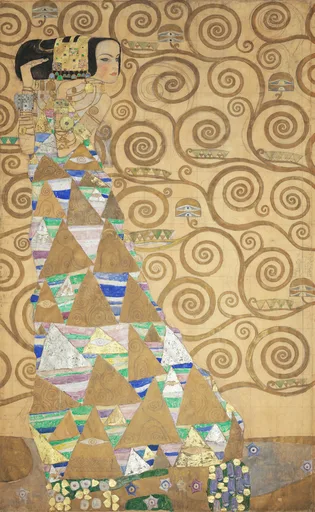
Stoclet Frieze: The Expectation (Dancer)
From $87 -
Sale!
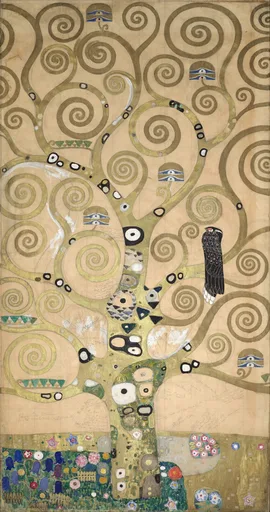
Stoclet Frieze: Tree of Life
From $87 -
Sale!
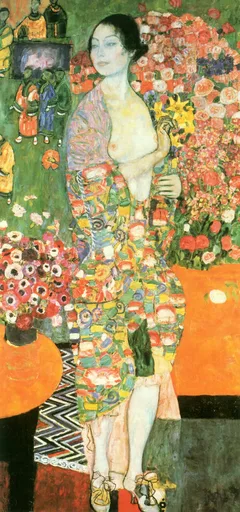
The Dancer (Ria Munk II)
From $87 -
Sale!
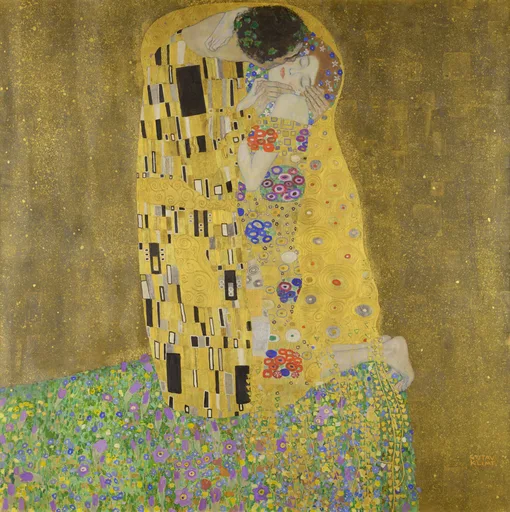
The Kiss (Lovers)
From $87 -
Sale!
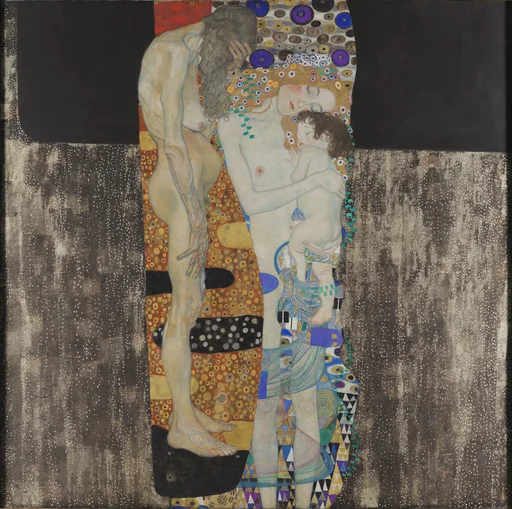
The Three Ages of Woman
From $87 -
Sale!
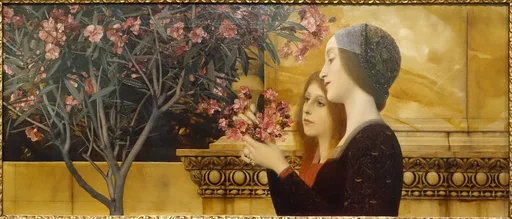
Two Girls with Oleander
From $87
Gold is the colour most people connect with Klimt, and with reason: for about a decade he painted with real gold and silver leaf, as the mosaic makers and icon painters he admired had done. This page gathers the pictures in which gold or yellow leads the palette, from the gilded paintings of those years to a few works where the yellow comes from flowers and autumn leaves.
What gold means in Klimt's work
Klimt's father was a gold engraver, and the son learned early how metal catches light. After he saw the Byzantine mosaics of Ravenna in 1903, gold became the ground of his most ambitious pictures. In The Kiss (Lovers) (c. 1907-1909) and the Portrait of Adele Bloch-Bauer I (1907), gold flattens the space and surrounds the figures like the background of an icon, so that only faces and hands keep their depth.
The same years produced Life is a Struggle (The Golden Knight) (1903) and The Three Ages of Woman (1905). Girlfriends (Water Serpents I) (1904), Danaë (1907) and Hope II (Vision) (1907-1908) belong to them too. The Stoclet Frieze designs, Tree of Life (1910-1911), Expectation (1911) and Fulfillment (1911), carry the gold into spirals and geometric robes. Judith II (Salome) (1909) is among the last pictures of the gold years, and Lady with a Fan (1917-1918) replaces the metal with a painted yellow ground of birds and flowers.
The taste for gold started early: the Portrait of Joseph Pembaur (1890) has a painted gold border, and Music (Study) (1895) a golden lyre. Birch Forest (Beech Forest) (1903) and Country Garden with Calvary (1912) are yellow for other reasons, autumn leaves and summer flowers.
How each reproduction is made to order
None of our reproductions uses real gold leaf. In the hand-painted oil reproduction, painted from scratch by an artist in oil on canvas after the museum's open-access photograph, the gold is built with brushed oil paint. In the archival canvas print, a giclée of the same photograph in pigment inks, it is printed colour. Both suggest the shimmer of the original rather than copy the metal.
Gold changes with the light: warm lamps deepen it and daylight cools it. A hand-painted canvas is photographed before it ships, so you can check the tone and approve it.
Frequently asked questions
Do the reproductions contain real gold?
No. The gold of the originals is suggested with oil paint in the hand-painted version and with printed colour in the canvas print. Neither uses metal leaf.
What was Klimt's golden phase?
It is the decade after the founding of the Vienna Secession, when Klimt used gold and silver leaf in his paintings. The Kiss (1908-1909) and Adele Bloch-Bauer I (1907) are its best-known works.
Which gold Klimt suits a bedroom?
The Kiss and the Stoclet Fulfillment are both tender pictures and easy to sleep beside. For a living room, Adele Bloch-Bauer I or the Tree of Life hold a large wall.