
Drawings Collection: Gustav Klimt Oil Painting Reproductions
Klimt‘s works on paper: pencil and chalk drawings of a lady in cape and hat, of women standing, reclining and curled up asleep, a study for his ceiling painting Medicine, and his full-size working drawings for the Stoclet Frieze in Brussels.
Showing all 12 results
-
Sale!
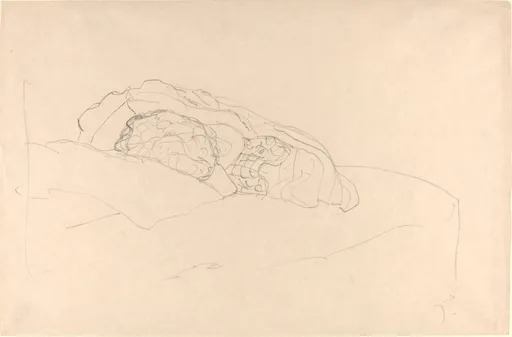
Curled up Girl on Bed
From $87 -
Sale!
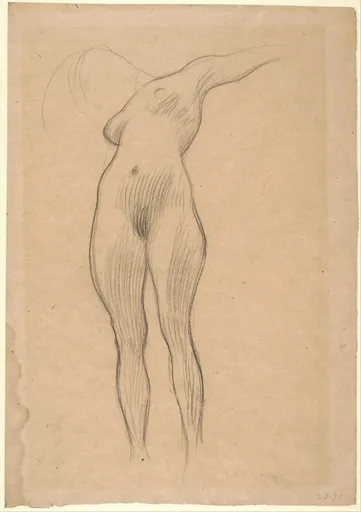
Floating Woman with Outstretched Arm (Study for the first version of “Medicine”)
From $87 -
Sale!
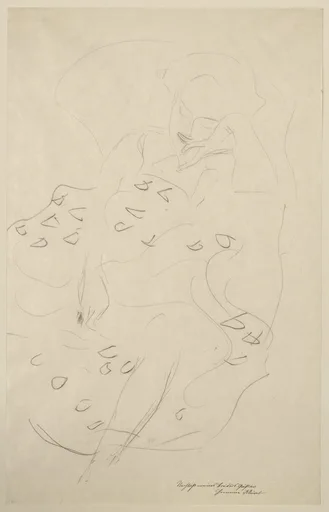
Girl Seated in a Chair
From $87 -
Sale!
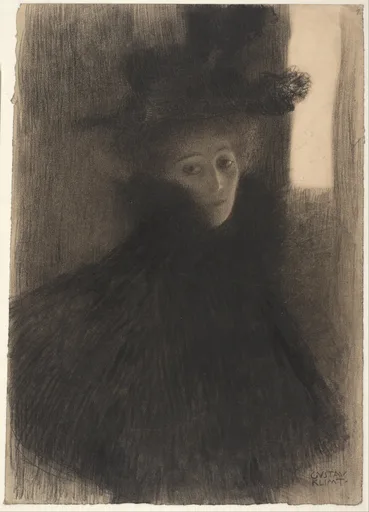
Portrait of a Lady with Cape and Hat
From $87 -
Sale!
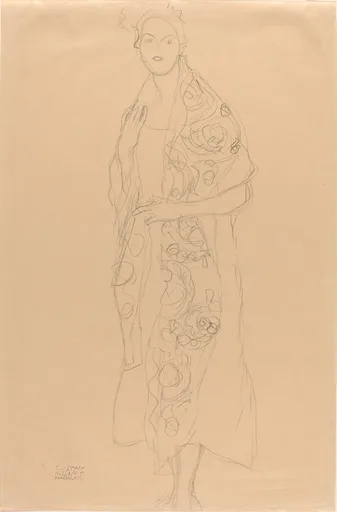
Portrait of a Woman
From $87 -
Sale!
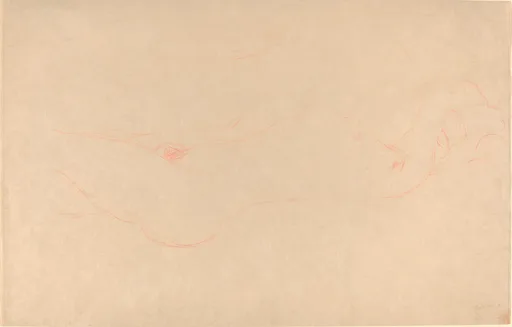
Reclining Woman
From $87 -
Sale!
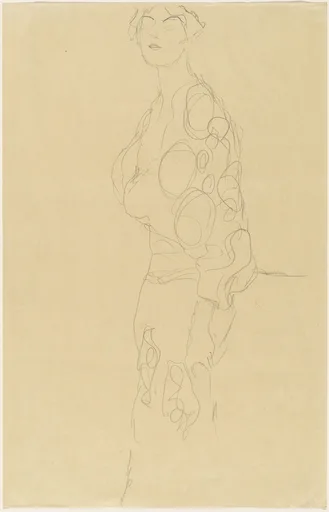
Standing Woman
From $87 -
Sale!
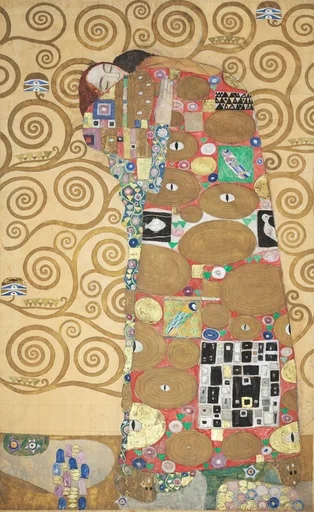
Stoclet Frieze: Fulfillment
From $87 -
Sale!
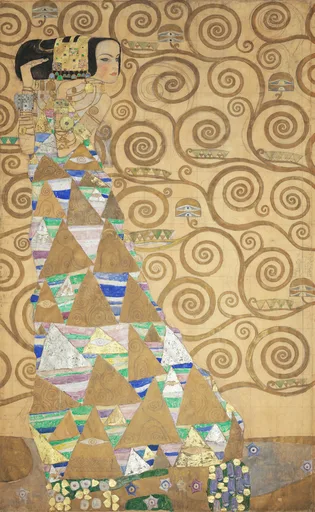
Stoclet Frieze: The Expectation (Dancer)
From $87 -
Sale!
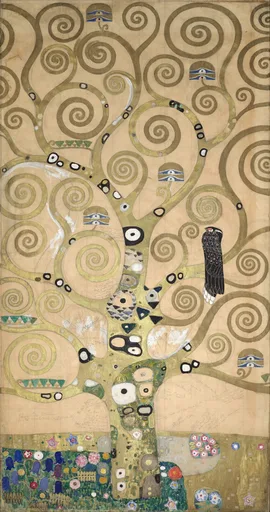
Stoclet Frieze: Tree of Life
From $87 -
Sale!
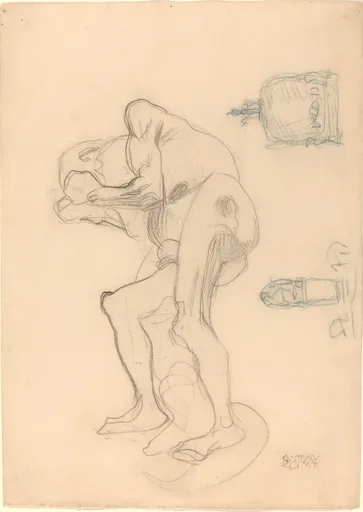
Study of a Nude Old Woman Clenching Her Fists, and Two Decorative Objects
From $87 -
Sale!
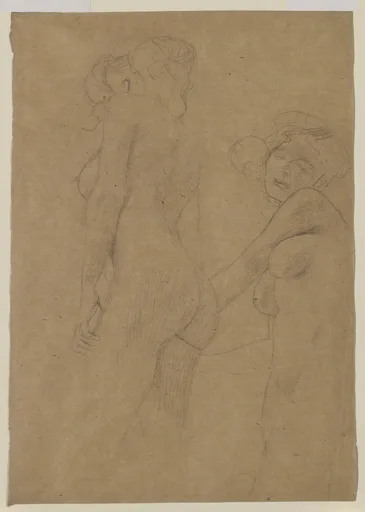
Two Female Nudes Standing
From $87
Klimt drew constantly, and thousands of his drawings survive. Most are studies of models posing in his studio, made for his own use rather than for exhibition. This collection gathers the drawings in our shop, reproduced as archival canvas prints or translated into oil by hand.
What drawing means in Klimt's work
The earliest sheet here, Portrait of a Lady with Cape and Hat (1897-1898), is a finished portrait drawing in warm brown tones, the sitter wrapped in fur under a wide hat. From 1900 the drawings serve the paintings. Floating Woman with Outstretched Arm (1900-1901) is a study for one of the figures in Medicine, his ceiling painting for the University of Vienna. Study of a Nude Old Woman Clenching Her Fists, and Two Decorative Objects (c. 1901) puts a figure study and two ornamental motifs on the same sheet.
The later sheets are freer. In Girl Seated in a Chair (1904) and Reclining Woman (c. 1909), Klimt draws with a soft pencil, often only the contour, and leaves much of the paper empty. In Standing Woman and Portrait of a Woman, both from about 1910, a patterned shawl carries the weight of the figure, and Curled up Girl on Bed (1916-1917) is little more than a body, a pillow and a blanket. These sheets are held today by collections such as the Albertina in Vienna and the National Gallery of Art in Washington.
The largest sheets here are working drawings. For the dining room of the Palais Stoclet in Brussels, Klimt drew Stoclet Frieze: Tree of Life (1910-1911), Stoclet Frieze: The Expectation (Dancer) (1911) and Stoclet Frieze: Fulfillment (1911) at full size, on tracing paper in pencil, gouache and pastel with gold, silver, bronze and platinum, and wrote his instructions for the mosaic workshop on them. All three are in the MAK, the Museum of Applied Arts in Vienna.
How each reproduction is made to order
For a drawing, the archival canvas print is usually the closer choice. A giclée of the museum's open-access photograph in pigment inks, it keeps the pencil line and the warm tone of the paper exactly. The hand-painted oil reproduction is painted from scratch by an artist, in oil on canvas, after the same photograph, and turns the drawing into a painted object with a visible brush. Both keep the proportions of the sheet.
Several drawings are nudes. Each piece is made after you order, and a hand-painted canvas is photographed for your approval before it ships.
Frequently asked questions
Are these prints on paper?
No. Both editions are on canvas: the archival print is printed on canvas and the oil version is painted on canvas. You can order either rolled, stretched or framed.
Why choose a Klimt drawing rather than a painting?
The drawings show how Klimt thought, with nothing added. Most of them have a pale palette that suits small rooms, bedrooms and walls where a gold painting would be too much.
Which drawing is a study for a painting?
Floating Woman with Outstretched Arm is a study for Medicine, one of the paintings Klimt made for the ceiling of the great hall of the University of Vienna.