
Black & White Wall Art Collection: Gustav Klimt Oil Painting Reproductions
Klimt with almost no colour: the pale plaster and fine line of the Beethoven Frieze, society women in white, and a poplar darkening under a coming storm. Restrained, graphic and at home beside neutral walls.
Showing all 9 results
-
Sale!
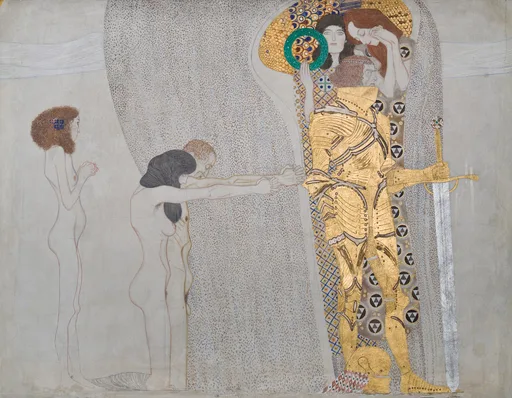
Beethoven Frieze: “The Sufferings of Weak Humanity” and “The Well-Armed Strongman” (Panel 3, left side wall)
From $87 -
Sale!
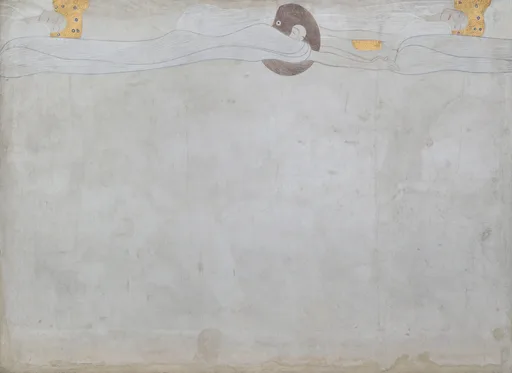
Beethoven Frieze: Longing for Happiness – Panel 1, left sidewall
From $87 -
Sale!
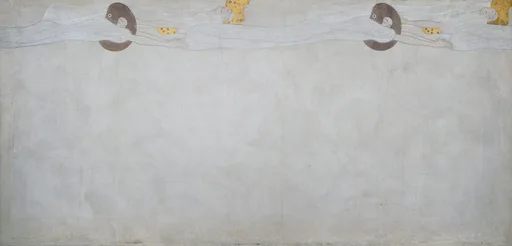
Beethoven Frieze: Longing for Happiness – Panel 2, left side wall
From $87 -
Sale!
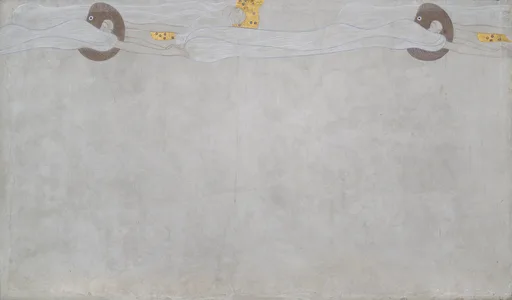
Beethoven Frieze: Longing for Happiness – Panel 4, left side wall
From $87 -
Sale!
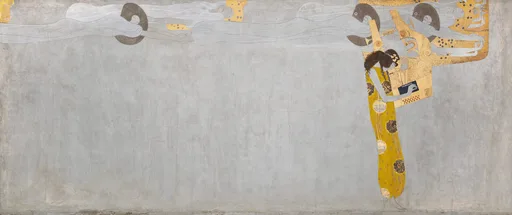
Beethoven Frieze: The Longing for Happiness Finds Appeasement in Poetry – Panel 7, right sidewall
From $87 -
Sale!
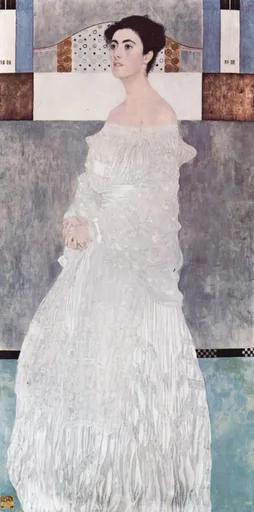
Margaret Stonborough-Wittgenstein
From $87 -
Sale!
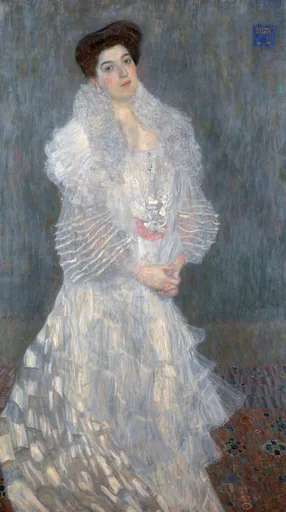
Portrait of Hermine Gallia
From $87 -
Sale!
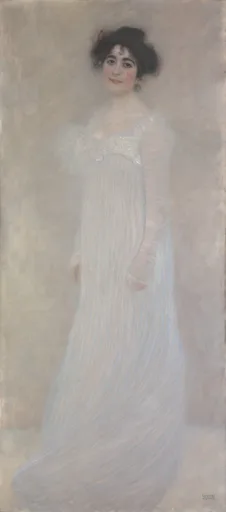
Serena Pulitzer Lederer
From $87 -
Sale!
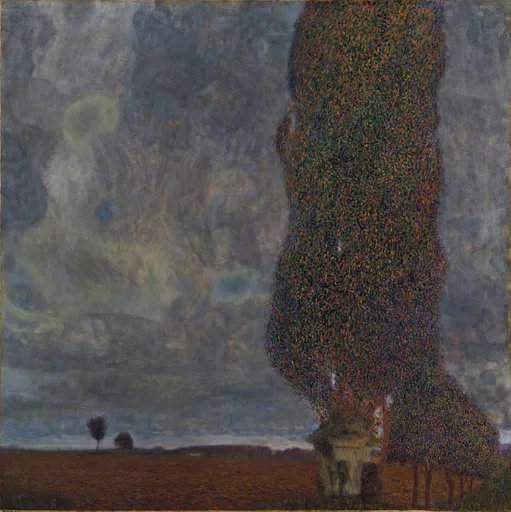
The Large Poplar II (Gathering Storm)
From $87
This collection gathers the Klimt pictures that lean towards black, white and grey rather than gold or crimson. It is a quieter side of Gustav Klimt, and one that suits modern interiors very well.
What black and white means in Klimt's work
Klimt is remembered for gold leaf and glowing ornament, yet some of his most striking walls are nearly colourless. The panels of the Beethoven Frieze, made in 1901-1902, rely on line, pale plaster tones and sparing touches of gold. Their floating figures and sweeping contours show his draughtsmanship at its clearest.
The portraits here follow the same logic. Serena Pulitzer Lederer (1899), Hermine Gallia (1904) and Margaret Stonborough-Wittgenstein (1905) are painted in whites and soft greys, with the sitter's dress dissolving into the space around her. The Large Poplar II (Gathering Storm), from 1903, adds a dark, charged landscape to the group.
Together these works offer a calm, graphic alternative to the brighter Klimt, and they pair easily with neutral walls, timber floors and simple frames.
How each reproduction is made to order
Every piece in this collection is made after you order. You can choose a hand-painted oil reproduction, painted from scratch by an artist in oil on canvas from the museum's open-access photograph, or an archival canvas print, a giclée of the same photograph in pigment inks, which suits a faithful, even rendering of tone. Soft greys and fine gradations are where careful reproduction matters most, so a hand-painted canvas is photographed before it ships for you to approve.
The paintings are in the public domain, which means they can be reproduced in full, without any licensing restriction on the image itself.
Frequently asked questions
Are these works truly black and white?
Not strictly. Their dominant colours are greys, creams and charcoal, sometimes with gentle warm or cool undertones and, in the frieze, small touches of gold.
What is the difference between an oil reproduction and a canvas print?
An oil reproduction is painted by hand on canvas and has visible brushwork and depth. An archival canvas print is printed on durable canvas and gives a precise, consistent image. Both are made to order.
Which piece suits a minimalist room?
The Beethoven Frieze panels and the pale portraits of Hermine Gallia or Margaret Stonborough-Wittgenstein are good starting points, since their restrained palettes sit quietly beside neutral decor.
Can I request a particular size?
Sizes are offered on each product page, so you can pick the one that fits your wall before ordering.