
The Beethoven Frieze Collection: Gustav Klimt Oil Painting Reproductions
The panels of the Beethoven Frieze, the mural Klimt painted for the Vienna Secession’s Beethoven exhibition of 1902: humanity’s longing for happiness, the knight who fights for it, the Hostile Powers, and the choir and kiss of the final wall.
Showing all 9 results
-
Sale!
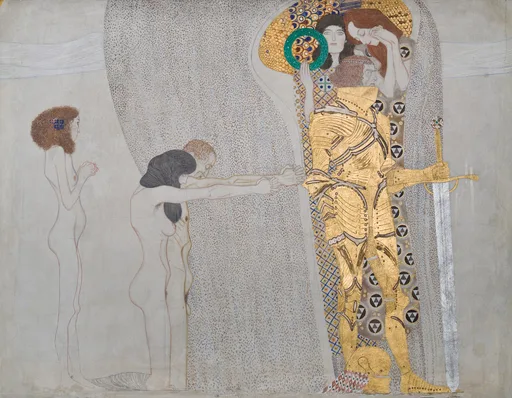
Beethoven Frieze: “The Sufferings of Weak Humanity” and “The Well-Armed Strongman” (Panel 3, left side wall)
From $87 -
Sale!
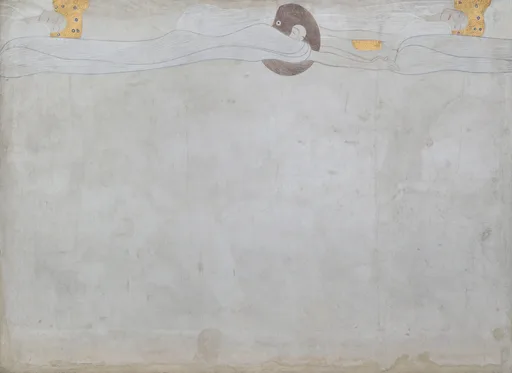
Beethoven Frieze: Longing for Happiness – Panel 1, left sidewall
From $87 -
Sale!
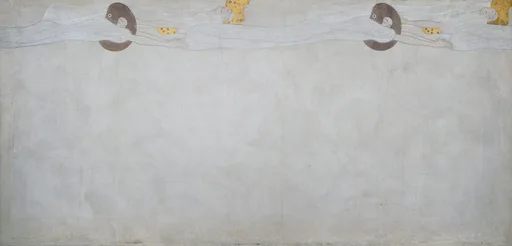
Beethoven Frieze: Longing for Happiness – Panel 2, left side wall
From $87 -
Sale!
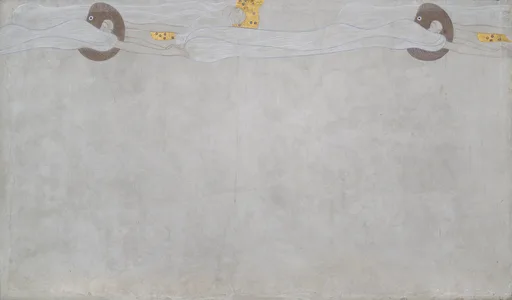
Beethoven Frieze: Longing for Happiness – Panel 4, left side wall
From $87 -
Sale!
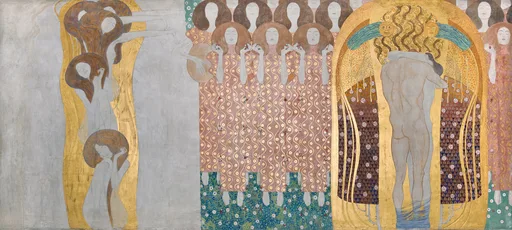
Beethoven Frieze: The Arts, Paradise Choir and The Embracement – Panel 8, right sidewall
From $87 -
Sale!
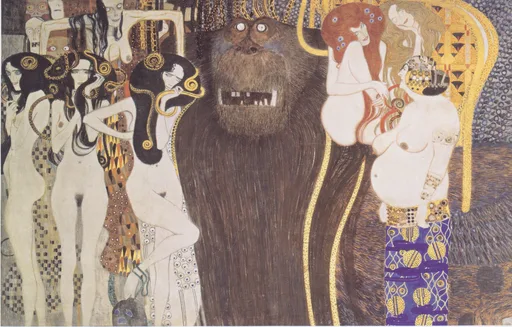
Beethoven Frieze: The Hostile Powers – Panel 5, short wall
From $87 -
Sale!
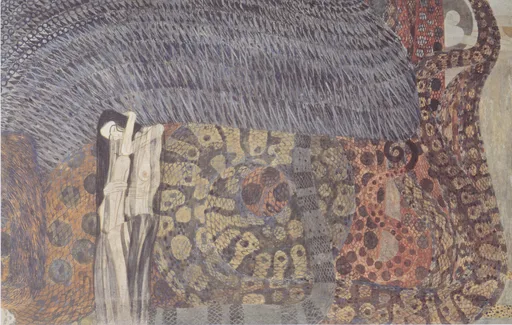
Beethoven Frieze: The Hostile Powers – Panel 6, short wall
From $87 -
Sale!
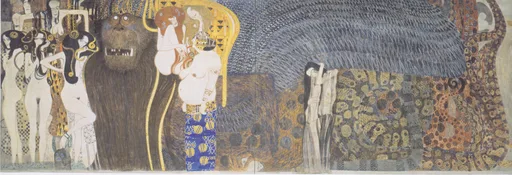
Beethoven Frieze: The Hostile Powers – Panels 5 and 6, short wall
From $87 -
Sale!
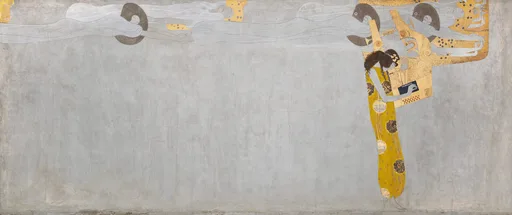
Beethoven Frieze: The Longing for Happiness Finds Appeasement in Poetry – Panel 7, right sidewall
From $87
In 1902 the Vienna Secession built an exhibition around Max Klinger's statue of Beethoven, and Klimt painted a frieze high on the walls of one of its rooms. It was meant to last only as long as the show. It survived, and it is displayed today in the Secession building, in a room of its own. This collection gathers its panels, each available as a hand-painted oil reproduction or an archival canvas print.
What the Beethoven Frieze means in Klimt's work
The frieze follows Richard Wagner's reading of the Ninth Symphony and runs around three walls. On the first long wall, floating figures stand for the Longing for Happiness. Below them, weak and suffering humanity kneels before a knight in golden armour, the Well-Armed Strong One, who takes up the fight on its behalf.
The end wall belongs to the Hostile Powers: the giant Typhoeus, an ape-like monster with wings and a serpent's body, his daughters the Gorgons, the figures of Sickness, Madness and Death, and Lust, Wantonness and Excess, with Gnawing Grief crouched apart. On the far wall the longing finds rest in Poetry, a woman playing the lyre. The Arts point the way to an ideal world, where a choir of angels sings and a naked couple embrace, under the line from Schiller's Ode to Joy that Beethoven set to music: this kiss to the whole world.
The knight returns in Klimt's painting Life is a Struggle (The Golden Knight), and the closing embrace looks forward to The Kiss.
How each reproduction is made to order
Klimt painted the frieze in casein on plaster, with gold, graphite and inlays of semi-precious stones and mother-of-pearl, and left much of the wall almost bare. The hand-painted oil reproduction translates that surface into oil on canvas: an artist paints each panel from scratch from the museum's open-access photograph, keeping the pale ground and the sparse, precise line. The archival canvas print is a giclée of the same photograph in pigment inks. Every size keeps the long proportions of the panel, so nothing is cropped.
A hand-painted canvas is photographed before it ships, for your approval.
Frequently asked questions
Where can I see the Beethoven Frieze?
In the Secession building in Vienna, the exhibition house the artists built for themselves, where it is shown in its own room. The frieze belongs to the Belvedere.
Which panel shows the golden knight?
The panel of the Sufferings of Weak Humanity and the Well-Armed Strong One, on the first long wall. The knight stands in full gold armour on the right of the panel, a long sword planted beside him.
Can I order several panels to hang together?
Yes. Each panel is sold on its own, so you can order several and hang them in sequence. Contact us if you would like help matching their heights.
How wide are the panels?
All of them are wider than they are high, and some more than twice as wide, which suits the space above a sofa, a long sideboard or a bed.