
How to Choose Klimt Wall Art for Every Room
Choosing a Klimt for a wall is easier room by room. Gustav Klimt painted landscapes, portraits, still lifes and interiors, and each of these behaves differently once it hangs in a real space with real light.
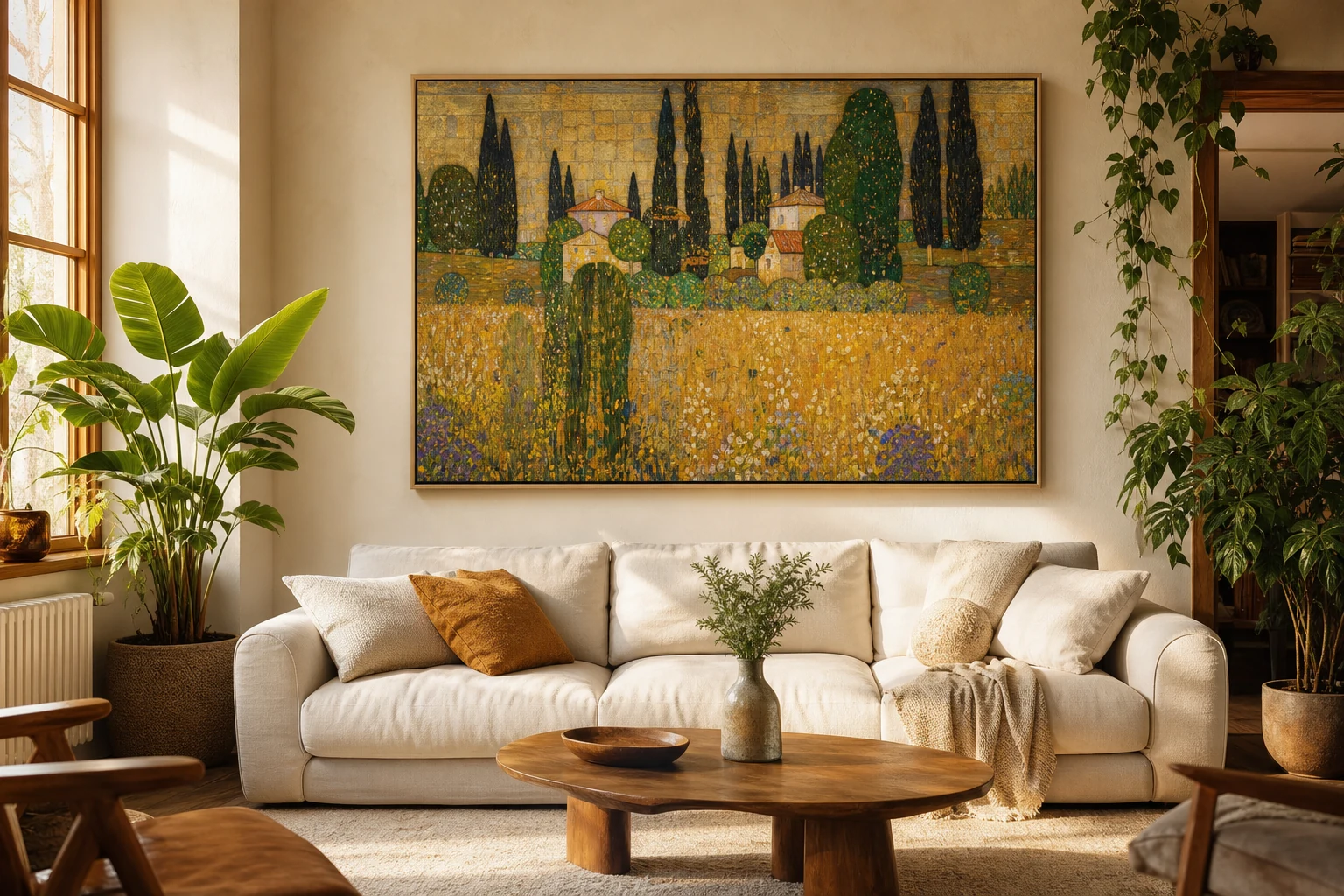
Living spaces: living room, bedroom and dining room
Living room
The living room can carry the largest and most ornamental work. Portraits with rich surface pattern and gold-toned palettes suit a wide wall above a sofa, while a calm landscape works if the furniture is already busy. Daylight from a window brings out warm tones, but evening lamplight can flatten cooler greens and blues, so look at the room at both times. Tip: view the wall from the sofa, not from the doorway, and size the work for that seat. The size guide explains how.
Bedroom
A bedroom asks for quiet. Soft landscapes, flowering gardens and gentle figure studies in muted greens, creams and blues help the room settle, whereas dense gold pattern can feel busy at the end of the day. Morning light is usually cooler and evening light warmer, so favour a palette that holds up in both. Tip: hang the work at a height you see while sitting up in bed, which is lower than most people expect.
Dining room
Dining rooms are seen seated, often by lamplight, so rich colour and decorative detail reward the closer, slower viewing. Still lifes, garden scenes and ornamental portraits all work, and a warm palette flatters food and candles. Tip: keep the lower edge of the frame comfortably above the sideboard or the backs of the chairs, and check how the frame finish sits beside your table wood.
Working and passing spaces: kitchen, hallway and home office
Kitchen
Kitchens are bright, practical and sometimes steamy. Choose a lively landscape or a fruit-and-flower subject in fresh greens and yellows, at a modest scale, away from the cooker. Strong overhead light can create glare, so a matte finish or an angle away from the lamp helps. Tip: hang on a wall that stays dry and well clear of splashes.
Entrance and hallway
A hallway is seen in passing, so a clear silhouette matters more than fine detail. Tall, narrow compositions suit a slim wall, and a single strong figure or tree reads well from the door. These spaces are often dim, so a lighter or gold-toned palette lifts them. Tip: leave room to walk past without brushing the frame, and keep it at eye level.
Home office
For a desk, choose something that rests the eye rather than demands it: a landscape with depth, or a portrait with a calm face and restrained palette. Glare on a screen can reflect in glass, so position the piece to the side of your monitor rather than behind it. Tip: hang it where you naturally look up when thinking, not in your direct line of work.
Small rooms and final checks
A small room
In a small room one considered piece beats several. A square or modest landscape in light tones opens the space, while a very dark palette can close it in. Stand at the far side of the room to judge how much wall the work will command, and leave generous space around it. Tip: let the work fill part of a wall, not all of it.
When you are ready, browse the full Klimt collection, then check proportions in the size guide and finishing options in the framing guide.